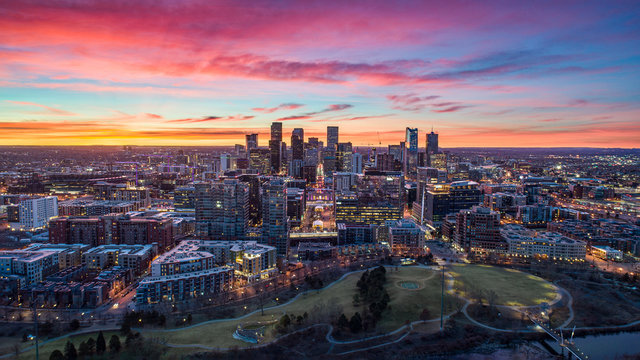
Denver Metro STR Investment: The Neighborhoods Worth Watching in 2026
Denver's short-term rental market is one of the most misunderstood in Colorado. Investors who approach it with the same framework they'd use for a mountain resort town often make expensive mistakes. Denver is a large, diverse metro with dramatically different STR performance across neighborhoods — and a regulatory environment that has evolved significantly over the past three years.
This guide is for investors who are seriously evaluating Denver STR opportunities and want an honest assessment of where the market stands.
The Regulatory Reality
Denver has one of the more complex STR regulatory frameworks in Colorado, and it's the first thing any investor must understand:
Primary Residence Requirement: Denver requires that STR hosts use the property as their primary residence. This effectively eliminates the pure investment model (buy a property, rent it full-time on Airbnb) that works in some other markets.
License Required: All STRs require a Denver STR license, which must be renewed annually. The application requires proof of primary residency.
Platform Compliance: Denver has agreements with major platforms to enforce licensing. Unlicensed listings are removed.
The practical implication: Denver STR investment works best for owner-occupants who rent their primary residence while traveling, or for investors who are willing to live in the property for the required period. Pure investment plays are better suited to unincorporated Jefferson County, Aurora, or other suburban municipalities with less restrictive regulations.
Where the Opportunity Is
Despite the primary residence requirement, Denver has a robust STR market driven by its position as a major convention city, a gateway to mountain recreation, and a growing tech hub with significant business travel.
RiNo (River North Art District) consistently produces the highest ADR in the Denver market. The neighborhood's combination of walkability, restaurant density, and proximity to downtown makes it attractive to both leisure and business travelers. Properties here typically achieve $180–$280/night ADR.
Capitol Hill and Cheesman Park offer Victorian-era homes and condos with character that photographs well and commands premium rates. The walkable, urban feel appeals to leisure travelers who want a neighborhood experience rather than a hotel.
Wash Park and Observatory Park attract families and longer-stay guests with their proximity to the park, good schools (relevant for relocation travelers), and quiet residential character.
LoDo and Union Station are the highest-demand areas for business travelers and convention attendees. Properties here benefit from consistent year-round demand but face more competition from hotels.
Revenue Benchmarks by Neighborhood
| Neighborhood | Avg ADR | Occupancy | Est. Annual Revenue | |-------------|---------|-----------|---------------------| | RiNo | $220 | 72% | $57,800 | | Capitol Hill | $185 | 68% | $45,900 | | LoDo/Union Station | $240 | 65% | $56,900 | | Wash Park | $195 | 70% | $49,800 | | Highlands | $175 | 67% | $42,800 | | Cherry Creek | $210 | 64% | $49,100 |
Estimates based on 1-bedroom equivalent. 2-bedroom properties typically achieve 60–70% higher revenue.
The Denver-to-Mountains Feeder Market
One of Denver's most valuable STR use cases is as a feeder market for mountain properties. Many Denver-area investors purchase properties in both markets: a Denver property that generates income from urban travelers, and a mountain property (Vail, Winter Park, Breckenridge) that captures the ski and summer recreation demand.
This two-property strategy allows investors to diversify across demand drivers (urban business/leisure vs. mountain recreation) and across seasons (Denver is relatively consistent year-round; mountain properties have pronounced peaks).
The Suburban Opportunity
For investors who want pure investment plays without the primary residence requirement, the Denver suburbs offer compelling alternatives:
Aurora has no STR primary residence requirement and benefits from proximity to Denver International Airport. Properties near the airport consistently generate strong occupancy from business travelers and airline crews.
Lakewood and Golden offer mountain-adjacent positioning with more permissive regulations than Denver proper. The Clear Creek Canyon corridor is particularly attractive for outdoor recreation-focused guests.
Englewood and Centennial are emerging STR markets with lower purchase prices and growing demand from Denver overflow.
What Makes a Denver STR Perform
The highest-performing Denver STRs share several characteristics:
-
Walkability: Denver guests prioritize walkability to restaurants and nightlife more than guests in resort markets. A Walk Score above 85 is a meaningful competitive advantage.
-
Design: Denver's STR market is competitive, and design quality is a primary differentiator. Properties with distinctive, Instagram-worthy design consistently outperform generic renovations.
-
Outdoor space: A private patio, rooftop deck, or yard commands a significant premium in Denver, where guests want to enjoy the 300+ days of sunshine.
-
Parking: Unlike resort markets where guests arrive by shuttle, most Denver STR guests drive. A dedicated parking space is a meaningful amenity.
Working With Local Management
Denver's STR market rewards operators who understand the local demand calendar: Broncos and Rockies home games, major conventions at the Colorado Convention Center, Red Rocks concert season, and the Denver Restaurant Week all create demand spikes that a well-calibrated pricing strategy can capture.
Atomic Vacation Rentals manages properties across the Greater Denver Metro alongside our mountain portfolio. If you're evaluating a Denver property for STR potential, we offer free analysis with realistic revenue projections based on actual comparable performance data.